
Table of Contents:
- Introduction
- What Is a Bone Tumor?
- Common Symptoms of Bone Tumors
- Diagnosis of Bone Tumors in India
- Treatment Options for Bone Tumors in India
- Recovery After Bone Tumor Treatment
- Why Consider Bone Tumor Treatment in India?
- Medical Travel Assistance for International Patients
- Contact IMW for Bone Tumor Treatment in India
Introduction: Bone Tumor Treatment in India
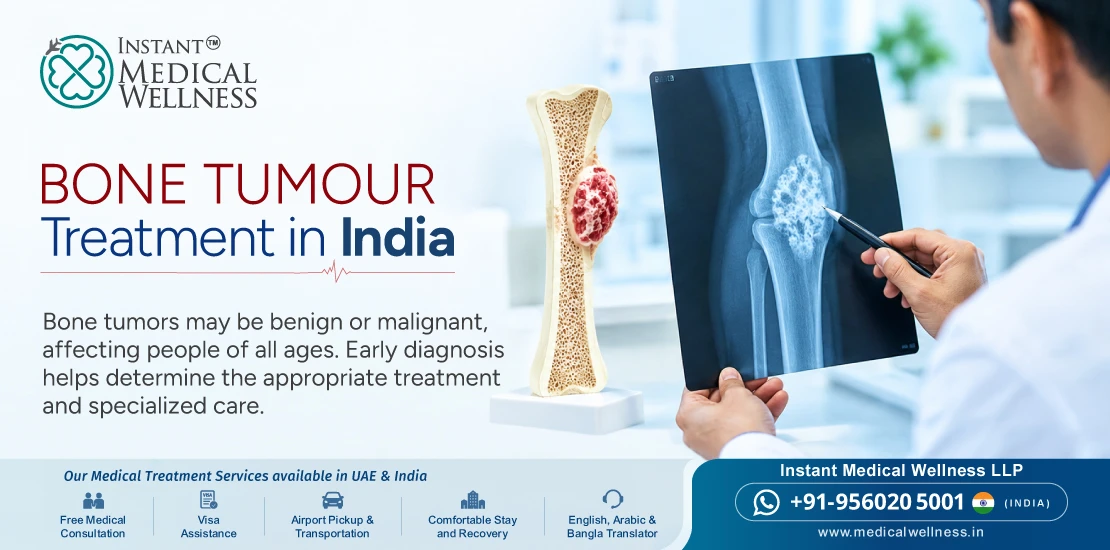
Bone tumors can affect people of different ages and may develop in almost any bone in the body. Some bone tumors are benign, meaning they are not cancerous, while others are malignant and may require specialised cancer treatment. Early diagnosis and appropriate medical care are important for determining the nature of a tumor and selecting the most suitable treatment.
India offers access to specialised medical facilities, diagnostic services, orthopedic surgeons, and oncology teams. International patients seeking bone tumor treatment in India can explore medical evaluation and treatment options based on their diagnosis, medical history, and individual needs.
Instant Medical Wellness LLP helps international patients coordinate their medical journey by assisting with medical reports, hospital appointments, doctor consultations, and related travel arrangements.
What Is a Bone Tumor?
A bone tumor is an abnormal growth of cells in or around a bone. It may originate in the bone itself or spread to the bone from cancer in another part of the body. The behaviour of the tumor, its location, size, and growth rate influence the treatment approach.
Bone tumors are generally classified into two main categories.
1. Benign Bone Tumors
Benign tumors are non-cancerous and do not spread to distant parts of the body. However, some can cause pain, weaken the affected bone, or interfere with movement. Depending on their size, location, symptoms, and risk of fracture, doctors may recommend regular monitoring or surgical treatment.
2. Malignant Bone Tumors
Malignant bone tumors are cancerous and may invade surrounding tissues or spread to other parts of the body. Examples include osteosarcoma, chondrosarcoma, and Ewing sarcoma. Treatment often requires a multidisciplinary team involving orthopedic oncology specialists, medical oncologists, radiologists, and pathologists.
It is important to distinguish primary bone cancer from cancer that has spread to the bones from another organ, as the diagnosis and treatment strategies can differ.
Common Symptoms of Bone Tumors
Symptoms vary according to the tumour’s type, size, and location. Some benign tumors cause no noticeable symptoms and are discovered during imaging performed for another reason.
Possible symptoms include:
- Persistent pain in a bone or joint
- Pain that becomes worse at night or continues despite rest
- Swelling or a noticeable lump near a bone
- Difficulty moving a nearby joint
- Reduced mobility or difficulty walking
- A bone fracture following a minor injury or without significant trauma
These symptoms can also occur in conditions unrelated to tumors. However, persistent or unexplained symptoms should be assessed by a qualified healthcare professional. Sudden severe bone pain or inability to bear weight requires prompt medical evaluation.
Diagnosis of Bone Tumors in India
Accurate diagnosis is essential before selecting a treatment plan. Doctors consider the patient’s symptoms, medical history, physical examination, and diagnostic test results.
1. Specialist Consultation
An orthopedic specialist or orthopedic oncologist reviews the patient’s symptoms, previous medical records, imaging reports, and any earlier treatment. The specialist determines which investigations are necessary.
2. Imaging Tests
Imaging helps doctors identify the tumor’s location, size, and possible involvement of surrounding structures. Depending on the case, investigations may include:
- X-ray: Helps identify changes in bone structure.
- MRI: Provides detailed images of the tumor and surrounding soft tissues.
- CT scan: Offers detailed information about bone anatomy and may assist with surgical planning.
- PET-CT or other staging scans: May be recommended in selected cases to evaluate possible disease spread.
Not every patient needs every test. The medical team selects investigations according to the suspected diagnosis.
3. Biopsy
A biopsy involves taking a tissue sample for examination under a microscope. It can help determine whether a tumor is benign or malignant and identify its specific type.
For suspected primary bone cancer, biopsy planning is particularly important. It should generally be coordinated with the team responsible for definitive treatment because the biopsy route can affect subsequent surgery.
4. Additional Investigations
Blood tests and other investigations may be required to assess general health, support diagnosis, or prepare for treatment. If cancer is confirmed, further tests may be needed to determine its stage and whether it has spread.
Treatment Options for Bone Tumors in India
Treatment depends on whether the tumor is benign or malignant, its type and stage, its location, the patient’s age and general health, and whether the bone is at risk of fracture.
1. Observation and Regular Monitoring
Some benign bone tumors do not require immediate treatment. If the tumor is not causing symptoms or creating a significant risk, doctors may recommend periodic clinical reviews and imaging to monitor changes.
Monitoring schedules are individualised according to the tumor and the patient’s condition.
2. Bone Tumor Surgery
Surgery may be recommended when a tumor causes persistent symptoms, weakens the bone, grows over time, or is malignant.
The surgical approach depends on the tumor’s characteristics. Procedures may involve removing the tumor, taking out affected tissue, and reconstructing or stabilising the bone when necessary.
For malignant tumors, the surgical team aims to remove the cancer safely while preserving as much function as possible. The exact procedure depends on the tumor’s location and extent.
3. Limb-Sparing Surgery
When a tumor affects an arm or leg, limb-sparing surgery may be an option for selected patients. The surgeon removes the affected area and may reconstruct the bone using a specialised implant, bone graft, or another suitable technique.
This approach aims to preserve the limb while achieving appropriate tumor removal. It is not suitable for every patient; the decision depends on the extent of the disease, involvement of nearby structures, and expected functional outcome.
4. Chemotherapy
Chemotherapy uses medicines to destroy cancer cells or control their growth. It may be recommended for certain bone cancers, including osteosarcoma and Ewing sarcoma.
Depending on the diagnosis, chemotherapy may be given before surgery, after surgery, or as part of a broader treatment plan. Its role varies by tumor type; it is not routinely required for every bone tumor.
5. Radiation Therapy
Radiation therapy uses high-energy radiation to damage cancer cells. It may be considered for selected bone cancers, including some cases of Ewing sarcoma, or when surgery is not appropriate or additional local treatment is needed.
The medical team evaluates the expected benefits and potential side effects before recommending radiation.
6. Targeted Treatment and Other Therapies
Certain tumors may be suitable for targeted medicines or other specialised treatments based on their biological characteristics. These options depend on the tumor type, test results, disease stage, and availability of an appropriate treatment.
Patients should discuss the expected benefits, limitations, and possible side effects of each option with their treating specialist.
Recovery After Bone Tumor Treatment
Recovery varies according to the diagnosis, the extent of surgery, and whether additional treatments such as chemotherapy or radiation are required.
After surgery, patients may need wound care, pain management, follow-up imaging, and rehabilitation. Some may temporarily require crutches, a walking aid, or restrictions on weight-bearing. Physiotherapy can help improve strength, movement, and daily functioning when recommended by the treating team.
Patients receiving chemotherapy or radiation may need additional monitoring for side effects and treatment response.
Follow-up appointments are important for assessing healing, monitoring for recurrence where relevant, and identifying complications early. Before travelling home, international patients should discuss fitness to travel, medication requirements, follow-up arrangements, and warning signs that need urgent attention.
Why Consider Bone Tumor Treatment in India?
India has medical facilities offering diagnostic imaging, specialist consultations, orthopedic procedures, and oncology services. Depending on the hospital and the patient’s clinical needs, care may involve collaboration between orthopedic oncology, medical oncology, radiology, pathology, rehabilitation, and other specialties.
When choosing a hospital, international patients should consider the specialist’s experience with their specific tumor type, available diagnostic services, multidisciplinary treatment planning, rehabilitation facilities, and arrangements for follow-up care.
Treatment suitability and outcomes differ between individuals. Patients should request a personalised medical opinion rather than relying only on general information about hospitals or procedures.
Medical Travel Assistance for International Patients
Travelling abroad for medical treatment requires careful coordination. Instant Medical Wellness LLP assists international patients seeking medical care in India by helping organise the medical journey according to individual requirements.
Support may include:
- Review and coordination of medical reports for specialist assessment
- Assistance with hospital appointments and doctor consultations
- Coordination of relevant medical records and diagnostic information
- Guidance regarding medical visa and invitation-letter requirements, where applicable
- Interpreter or language assistance, when available
- Assistance with accommodation and local transportation arrangements
- Airport pickup and related travel coordination, where arranged
- Support with follow-up communication and medical documentation
Patients should bring previous imaging, biopsy reports, pathology slides or blocks when requested, medication lists, and details of earlier treatments. The treating hospital will confirm which documents are required.
Instant Medical Wellness LLP facilitates coordination between patients and healthcare providers; diagnosis, treatment decisions, and clinical care remain the responsibility of qualified medical professionals and the treating hospital.
Contact IMW for Bone Tumor Treatment in India
Instant Medical Wellness LLP
Website: www.medicalwellness.in
Email: india@medicalwellness.in
WhatsApp & Botim: +91-9560205001
International patients can contact IMW to discuss their medical reports and request assistance with coordinating a specialist consultation in India. The appropriate next steps depend on the patient’s diagnosis and the treating hospital’s assessment.
Medical Disclaimer: This article is intended for general educational and informational purposes only. It does not replace professional medical advice, diagnosis, or treatment. Bone tumors vary significantly in type and behaviour, and treatment recommendations must be based on an individual medical assessment and appropriate diagnostic investigations.
Patients should consult a qualified healthcare professional regarding symptoms, test results, treatment options, and potential risks. Do not delay seeking medical advice because of information provided in this article.